










Many believe that thick, yellow, or brittle nails are always the result of a fungus infection in the nails.
In reality, these symptoms may result from a nail psoriasis where the nail appearance changes in the same way. Both can cause issues like nail discoloration, the nail becoming thickened, and crumbling edges. Since these characteristics are shared by both nail psoriasis and nail fungus, visually differentiating the two can be really hard.
Nail psoriasis and nail fungus infection have significantly different root cause, and this difference is crucial from the treatment perspective.
It is not rare to meet someone who mistakenly starts worrying about a psoriasis-like nail condition only to find out weeks later that the correct diagnosis was actually fungal infection. Many patients also attribute nail symptoms to nail fungus for months before the real diagnosis comes up and they find out it’s psoriasis.
That’s why if your nails have changed in ways that you cannot explain, it would be a good idea to visit a dermatologist in Patna for your condition to be examined so that you can be assured of your diagnosis and get the right and timely treatment.
Dr. Rizwana Barkat, MBBS, MD (Skin & V.D.), with a Fellowship in Cosmetic Dermatology and Dermatosurgery, has treated quite a few patients who delay treatment thinking the appearance will clear up on its own only to get to the clinic with more aggressive symptoms later on.
Nail Psoriasis vs Nail Fungus: What’s the Difference?
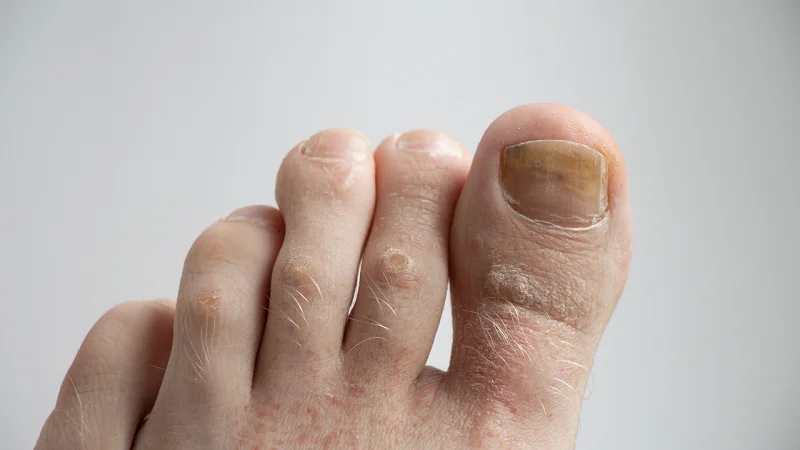
Each condition has a different origin. Nail psoriasis is a consequence of an immune response (the same factor that causes psoriasis of the skin) leading to disturbed nail growth patterns.
Nail fungus, on the other hand, is a real infection of the nail plate and the adjacent tissues that are usually caused by dermatophytes fungi which thrive in warm and humid environments.
While visually these conditions may be similar, the fundamental difference is that one is an immune-mediated condition whereas the other is an infection-induced problem, therefore they also require different treatment approaches.
>> Consult Dr. Rizwana Barkat for a Diagnosis of Nail Diseases >> Book Appointment Today!
Here’s a quick side-by-side comparison to catch the differences:
| Feature | Nail Psoriasis | Nail Fungus |
|---|---|---|
| Underlying cause | Immune-related skin condition | Fungal infection |
| Nail pitting | Common | Rare |
| Yellow discoloration | Possible | Very common |
| Nail thickening | Common | Common |
| Nail lifting | Common | Common |
| Crumbly nails | Common | Common |
| Oil-drop patches | Distinctive sign | Not seen |
| Skin psoriasis | Often present | Not related |
| Contagiousness | Not contagious | Can spread to other nails/people |
| Treatment | Dermatologist-prescribed psoriasis treatment | Antifungal treatment |
Several of the signs overlap heavily, which is exactly why looks alone rarely settle the question. A fungal nail infection treatment in Patna only helps if the diagnosis behind it is right.
Nail Psoriasis: Signs That Point Toward Psoriasis
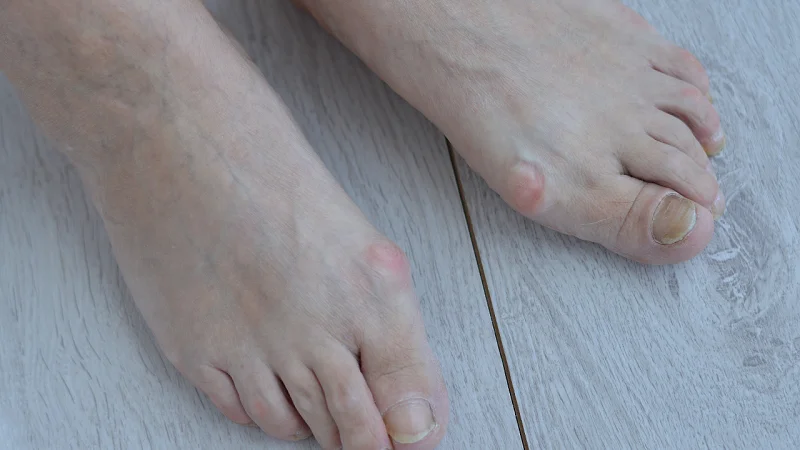
Nail psoriasis causes a unique combination of changes. Minute pinprick-like depressions across the nail’s surface (known as nail pitting), is one of the most striking features.
You may also spot oil-drop or salmon-colored patches under the nail, which are quite specific signs of psoriatic nail changes and something you rarely see in other conditions.
The other features are nail separation from the nail bed, thickening, crumbles at the nail edges, and uneven patterns of growth. Nail psoriasis often coincides with skin plaques or joint problems, though sometimes they appear without one another.
Actually, many people have nail changes without any skin involvement, which is just one of the reasons it is overlooked or confused with another condition.
NOTE: Being able to recognize these symptoms may get you close to the correct diagnosis, but only a nail specialist can confirm what’s happening and the best way for it would be through a dermatologist consultation.

Nail Fungus: Signs That Point Toward a Fungal Infection
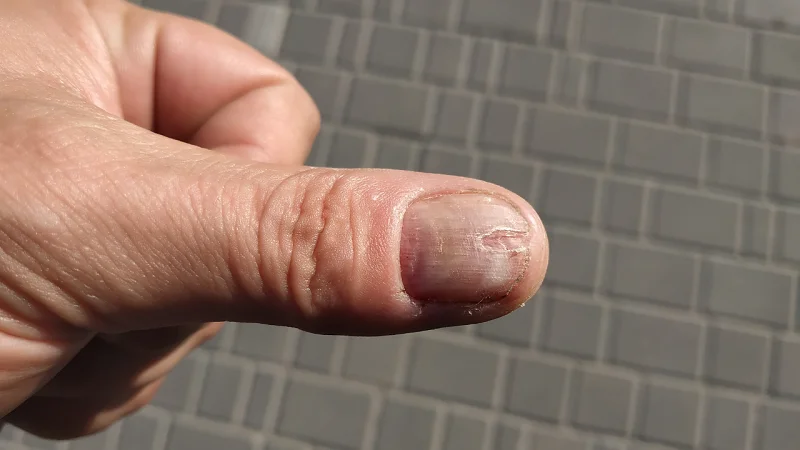
Fungal infection is not a fast-developing problem. Typically, the affected nail first changes colour (yellow or white), then continues to thicken over weeks or even months. Meanwhile, the nail edges become brittle, break easily, and debris can collect under the nail plate.
The texture of the nail gets rougher as the disease progresses and you may witness nail distortion or lifting away from the nail bed. A mild odor can show up too. But here’s the catch: a yellow or thickened nail doesn’t automatically mean fungus.
Other nail conditions, psoriasis included, cause changes that overlap almost completely with fungal symptoms. Left alone, or treated for the wrong thing, either condition tends to get worse, which is one more reason to avoid nail infection through early, accurate evaluation.
3 Nail Changes People Often Mistake for Fungus
Certain changes get blamed on fungus by default, even when something else is going on. Three worth knowing:
1. Nail Pitting
Those small surface depressions usually point to nail psoriasis, not fungus. Fungal infections don’t typically create this pitted texture.
2. Nail Lifting
Separation from the nail bed happens with both psoriasis and fungal infection, so lifting on its own doesn’t tell you which condition you’re dealing with.
3. Thick or Crumbly Nails
This looks like classic fungus, but psoriasis produces the same texture. You can’t tell just by looking.
The pattern is clear. Yellow nails don’t automatically mean fungus. Thick doesn’t automatically mean fungus. Lifting doesn’t automatically mean fungus.
>> Book an Online Teleconsultation for a Quick Visual Checkup
Can Nail Psoriasis and Nail Fungus Look the Same?
Yes. And that’s exactly why people mix them up so often. Both can cause thickening, discoloration, separation, crumbling, and nail shape changes. Side by side, an untrained eye usually can’t tell which is which.
To make it messier, you can have a fungal infection on top of existing nail psoriasis at the same time. So, spotting psoriasis-like or fungus-like changes doesn’t confirm either diagnosis by itself.
A proper evaluation for the right treatment of nail problems in Patna, is really the only reliable way to know what’s actually going on.
How is Nail Psoriasis or Nail Fungus Diagnosed?

Diagnosis usually starts with a clinical exam of the nails, cuticles, and surrounding skin. A dermatologist checks for specific patterns like pitting, oil-drop patches, the texture of any debris. These help separate one condition from the other.
When the exam alone doesn’t give a clear answer, further testing may help. A nail diagnosis can be done through a fungal testing of nail clipping to reveal the presence of dermatophytes in a laboratory setting.
This diagnostic approach is especially helpful if there’s a possibility of other skin diseases mimicking fungal infection since the definitive diagnosis of whether an infection is present gets done without the need for guessing.
Basically, one should not assume all discolored or thick nails are caused by a fungus unless a dermatologist says so after checking you out. Diagnosis should be the basis of the treatment, not vice versa.
👉 Visit R Square Skin, Hair, Nail Clinic for a Diagnosis
Treatment for Nail Psoriasis vs Nail Fungus
Absolutely, after getting to the root of the nail problem, your treatment will become very individualized. Usually, the extent of the disease and the number of nails involved play the role in determining what the dermatologist will offer to you as treatment.
Psoriasis of nails can be either a simple treatment with topicals or, possibly, a more aggressive advanced therapy be used if several nails show signs of the disease in a very bad way.
On the contrary, treatment of nail fungus typically implies that you take a medication either as a topical or oral antifungal medication, and the choice of the one will depend on how deeply and extensively your nail is affected by the infection.
There are oral antifungals which are considered the most potent and have the best results in cases where the infection has already gone through a large part of the nail layer and affects most of the nail plate.
But in either case, the treatment you get right is the one that matches your condition precisely and which is confirmed by the dermatologist, NOT the one that seems “obvious” based only on appearance.
So, if you really wish to know what is happening with your nails, get an appointment with Dr. Rizwana Barkat at R Square Clinic for nail disorder treatment in Patna.
When Should You See a Dermatologist for Nail Changes?
Naturally, not every change in the nail appearance must be addressed on an urgent level.
Nevertheless, some symptoms might indicate that there is a more severe problem than just an infection from a fungus, and a good idea would be not managing such a situation on your own.
Look for symptoms like:
- persistent discoloration,
- repeated thickening,
- nail pain,
- nail lifting,
- multiple nails getting involved,
- symptoms that keep coming back,
- or anything that hasn’t budged despite over-the-counter products.
This isn’t a reason to panic over every small nail imperfection. It just means nail changes that stick around for several weeks deserve a proper checkup from a qualified nail doctor instead of another round of guesswork.

FAQs
Following are some of the common questions patients have about both these nail conditions and how to differentiate and treat them. If your question is not covered here, kindly leave it in the comments section below.
1. How to differentiate between nail fungus and nail psoriasis?
Nail pitting and oil-drop patches lean toward psoriasis; yellow discoloration with debris under the nail leans toward fungus. But testing from a dermatologist gives the most reliable answer.
2. Can nail psoriasis go away?
It can improve significantly with proper dermatologist-directed treatment, though it’s usually managed long-term rather than cured outright.
3. Will an antifungal help psoriasis?
No, an antifungal medication won’t work for nail psoriasis since it isn’t caused by a fungal infection.
4. What is the root cause of nail psoriasis?
An abnormal immune response that affects how the nail matrix and nail bed function.
5. Can nail psoriasis look like nail fungus?
Yes. Both can cause thickening, discoloration, and crumbling that look very similar.
6. How can you tell if nail changes are caused by psoriasis or fungus?
A dermatologist examination, sometimes paired with fungal testing on a nail clipping, gives the clearest answer.
7. Can nail psoriasis and fungal infection occur together?
Yes, both conditions can affect the same nail at the same time.
8. Does nail fungus always cause yellow nails?
No, fungal nails can also appear white, brown, or thickened without much yellowing.
9. When should you see a dermatologist for nail changes?
If changes persist for several weeks, involve multiple nails, cause pain, or don’t respond to over-the-counter treatment.
Seek Early Nail Care to Treat the Root Cause of Nail Changes
Nail psoriasis and nail fungus can look strikingly similar, but small details like pitting, oil-drop patches, related skin changes, the pattern of nail separation often set them apart.
Since the right treatment depends entirely on getting the diagnosis right, it’s not worth guessing about your nail health or the condition that’s affecting its appearance.
Dr. Rizwana Barkat and the team at R Square Skin, Hair, Nail Clinic can figure out what’s actually happening with your nails and point you toward a treatment that actually works. Consult Dr. Rizwana Barkat to get a clear answer about your nail changes.


