










Not every case of hair thinning needs the same solution. PRP and PRF have gained attention as regenerative hair treatment options.
Both use the patient’s own blood to support weakened hair follicles. However, they differ in preparation, platelet concentration, and growth-factor release.
That difference often raises a practical question: which treatment makes more sense?
The answer is not always PRF or PRP. Hair loss causes, follicle health, and previous treatments can change the choice. A proper hair loss evaluation helps identify the underlying problem first.
This guide breaks down both treatments, their results, costs, and suitability. It also explains what realistic treatment outcomes may look like.
PRP vs PRF Hair Treatment: Key Differences
Both PRF and PRP are regenerative hair treatment options using the patient’s own blood. PRP separates platelet-rich plasma, while PRF retains a platelet-rich fibrin matrix.
This difference affects growth-factor release in the scalp, making PRF longer acting. Both methods support hair restoration and help slow down hair thinning, though. They are used based on diagnosis and scalp condition.
The table below explains the key differences clearly.
| Factor | PRP | PRF |
| Blood processing | Uses centrifugation to separate plasma | Uses slower centrifugation |
| Fibrin matrix | Usually minimal or absent | Present |
| Platelet concentration | Concentrated platelets | Platelets remain within fibrin |
| Growth-factor release | Relatively faster | More gradual |
| Hair loss evidence | More established | Still developing |
| Treatment sessions | Usually several sessions | Protocols can vary |
| Treatment cost | Generally less expensive than PRF | Varies by clinic and sessions |
| Main use | Supports weakened follicles | Supports regenerative scalp care |
These factors help explain why treatment plans can vary. However, the procedure alone does not determine the outcome. The cause and stage of hair loss matter too, which is why hair loss treatment in Patna always begins with proper evaluation.
→ Find Out the Best Hair Loss Treatment Plan for You – Consult Dr. Rizwana Barkat
PRF vs PRP Hair Loss: What’s the Difference?
PRP and PRF both involve injections and growth factors derived from the patient’s blood, but they vary in how the blood components are prepared, hence affecting how the growth factors interact with the scalp.
What is PRP?
PRP stands for platelet-rich plasma. It comes from a small blood sample taken from the patient. The sample is processed to separate plasma containing a higher platelet concentration.
Platelets contain growth factors that support tissue repair. When injected into thinning scalp areas, these factors may support follicle activity. PRP has also been studied more extensively for pattern hair loss.
👉 Learn More – PRP Hair Treatment
What is PRF?
PRF stands for platelet-rich fibrin. Like PRP, it uses the patient’s own blood. However, PRF preserves platelets within a fibrin-based structure.
This fibrin matrix gives PRF a different biological profile. It may help release growth factors more gradually around the treated area. However, PRF research for hair loss remains less extensive than PRP research.
How is Blood Processed?
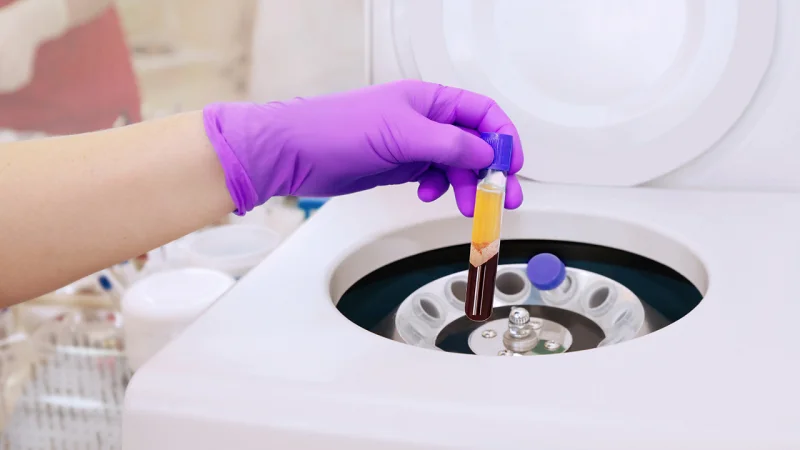
Both treatments require blood collection followed by centrifugation. However, the centrifugation process differs between them.
PRP generally uses centrifugation to separate platelet-rich plasma. The exact speed and duration can vary between protocols.
PRF usually uses slower centrifugation without anticoagulants. This allows fibrin to form naturally within the preparation. Therefore, processing directly affects the final product.
How Do Platelets Concentration Differ?
Both treatments concentrate platelets compared with normal blood. However, the final platelet concentration can vary considerably.
PRP protocols may produce different platelet levels depending on the equipment and preparation method. PRF also varies according to centrifugation settings and collection techniques.
Therefore, platelet numbers alone cannot determine treatment effectiveness. The preparation method and clinical protocol also matter. These factors can influence the PRF and PRP hair treatment cost and overall treatment plan.
Is a Fibrin Matrix Present?
A fibrin matrix is a three dimensional structure that is assembled from fibrin (a naturally occurring protein) and can be described as a structure that supports the aggregation of red and white cells and platelets.
Conventional PRP contains little or no structured fibrin matrix because of its preparation process. In contrast, PRF preserves this fibrin network, which may help retain growth factors around the treatment area.
How Are Growth Factors Released?
PRP releases growth factors relatively quickly after administration. These growth factors interact with surrounding tissues and may support follicle function.
PRF contains a fibrin matrix that can act as a temporary scaffold. This structure may allow growth factors to release more gradually.
However, a slower release does not automatically mean better results. Clinical outcomes depend on several patient and treatment factors.
How Are They Used in Hair Restoration?
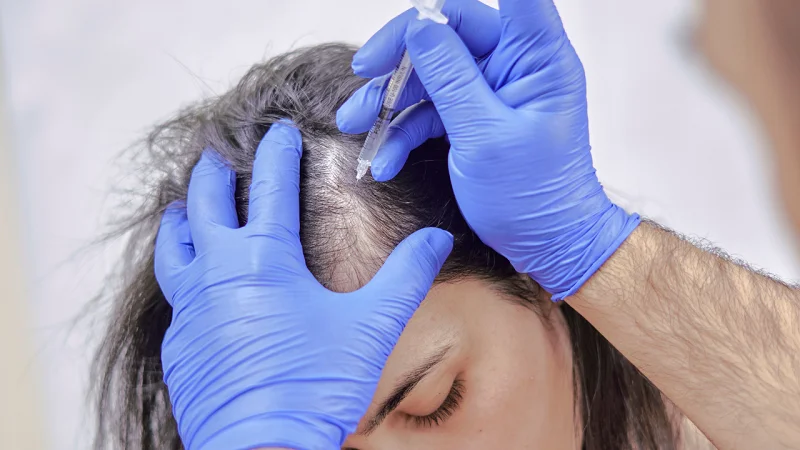
Both treatments can support hair restoration in suitable patients. They are mainly considered for pattern hair loss with weakened but viable follicles.
A clinician injects the prepared product into selected scalp areas. The treatment usually forms part of a broader hair-loss management plan.
PRP currently has more established evidence for androgenetic alopecia. PRF remains a promising regenerative approach with developing evidence.
What About Result and Sessions?
Results can differ based on hair loss cause, follicle health, severity, and treatment protocol. Early treatment may offer better potential when follicles remain active.
PRP commonly involves multiple sessions followed by assessment. Some patients may also need maintenance treatments.
PRF treatment schedules vary because standardized protocols remain less established. Therefore, there is no fixed number of sessions for everyone.
So, why are there all the variations in PRF effectiveness on hair loss? There’s no correct explanation. It entirely depends on individual treatment, the condition of the hair follicles and past treatment received. Which is why proper clinical diagnosis is crucial prior to treatment.
>> Book a Consultation for Hair Loss Diagnosis and Selection of Treatment Plan

How Does PRP Help with Hair Loss?
PRP may activate weakened hair follicles by delivering concentrated platelets and growth factors into the scalp.
These factors support surrounding follicle tissue and may improve hair density over time. It works best in early pattern hair loss when follicles remain active.
Advanced hair loss may respond less effectively. Treatment usually involves multiple sessions planned by a dermatologist after scalp evaluation. Maintenance sessions may also be needed.
For more options, explore the top hair loss treatments in Patna for a personalized approach.
How Does PRF Help with Hair Loss?
PRF uses platelets and growth factors within a fibrin matrix. This structure may support gradual growth-factor release around hair follicles.
A PRF scalp treatment can target weakened follicles during early hair thinning. It may support a regenerative hair treatment approach when follicles remain active.
However, PRF research remains less extensive than PRP research. Results can also vary between patients.
Therefore, progressive hair thinning often needs early intervention for better outcomes. Some clinicians often combine therapies for better long-term scalp health.
Is PRF Better Than PRP for Hair Loss?
Not necessarily. PRF may offer slower growth-factor release through its fibrin matrix. However, PRP currently has more clinical evidence for pattern hair loss.
A 2023 meta-analysis of 9 randomized trials involving 238 patients found that PRP significantly improved hair density at 3 and 6 months compared with placebo.
Still, the better choice depends on several factors, including:
- Cause and severity of hair loss.
- Hair follicle health.
- Duration of progressive hair thinning.
- Previous treatment history.
- Overall scalp condition.
- Individual treatment goals.
Therefore, PRF vs PRP for hair loss reviews cannot determine the best option for each and every case that’s true universally. A dermatologist should assess the scalp before recommending either treatment.
The right approach may also involve a combination of hair loss treatment, depending on the individual case.
PRF vs PRP: Which Hair Loss Conditions May Benefit?
Platelet-based treatments mainly suit pattern hair loss, also called androgenetic alopecia. They may support follicles that have become weaker but remain active. PRP has stronger clinical evidence in this area.
PRF is also being explored as a regenerative option, but research is still evolving, and the PRF hair treatment success rate can vary depending on patient factors, treatment protocol, and stage of hair loss.
However, not every type of hair loss needs PRP or PRF. Hair shedding can have several underlying causes, including:
- Nutritional deficiencies
- Hormonal issues
- Thyroid disorders
- Active scalp disease
- Certain autoimmune conditions
- Temporary shedding
You may need blood tests, medication or specialized treatment. Therefore, identification of cause prior to selecting a regenerative method will be useful.
To widen the scope of options for, get some insight on hair loss treatment and also get some effective hair care treatments done by a dermatologist.
👉 Visit R Square Clinic to Get a Quick Consultation
Can PRF and PRP Be Combined with Other Treatments?
Yes, other treatments could be used alone with PRP and PRF or even with each other for hair treatment.
A combination of hair loss treatment may include minoxidil, microneedling, or other dermatologist-recommended options. Combining approaches can target hair loss through different mechanisms.
However, every combination needs individual assessment. The cause, severity, scalp condition, and previous treatments all matter. Therefore, a dermatologist should design the treatment plan carefully.
It can help with more sustainable management and also prevent the performance of inappropriate or unnecessary procedures.
How Does a Dermatologist Choose?
The selection between PRF or PRP is driven by the type of hair loss or the pattern of hair thinning present. After determining it is hair loss, a dermatologist will evaluate its pattern, extent, and the condition of the scalp.
Hair density can determine the vitality of the hair follicles and suitability for treatment.
The duration of symptoms and previous treatments also matter. Patient-driven goals lead in selection of the treatment that best meets their needs.
The appropriate type of PRP or PRF and/or other hair regrowth treatment may then be prescribed.
Book Your Hair Rescue Consultation Today!
PRP and PRF can both support suitable hair-loss cases. However, no single approach is superior. The best option will vary depending on the factors such as cause of hair loss, follicle strength, progression, and medical history prior to procedure.
R Square Clinic in Patna provides dermatology and hair-care services. Dr. Rizwana Barkat evaluates individual scalp conditions before recommending suitable treatment options. The clinic offers both PRF and PRP treatment for hair loss.
Ready to explore suitable options for healthier hair? Schedule a consultation at R Square Clinic. Talk about the problems, targets and results expected with a qualified dermatologist.


