








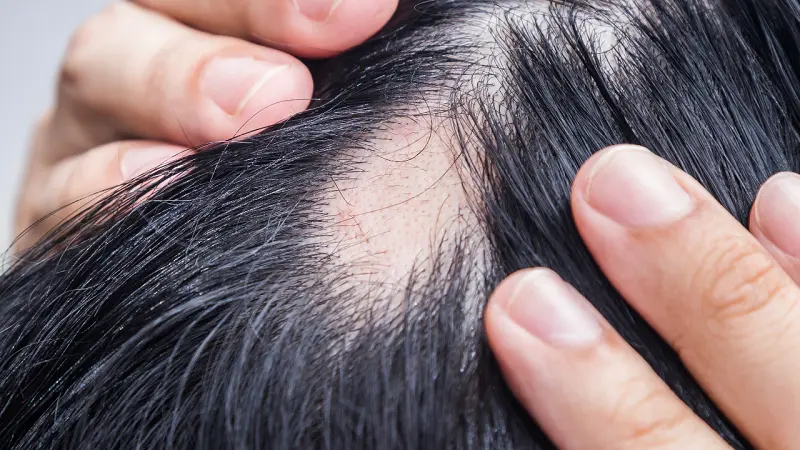
Waking up to a coin-sized bald spot is nothing short of horrifying. But alopecia areata is, actually, a treatable autoimmune disorder and is not necessarily a death certificate for future hair growth when you get the right treatment at the right time.
The condition happens when the body’s immune system erroneously attacks hair follicles and so you get sudden patches of hair loss in places such as head, beard, or brows.
The good news is that if diagnosed correctly, and with a proper treatment plan, many patients end up experiencing significant hair regrowth.
So, should you see bald hair patches, try not to stay in a passive mode and wait things out. Dr. Rizwana Barkat, who has an excellent reputation as a top dermatologist in Patna, can enlighten you thoroughly and then prepare a treatment plan specifically according to your situation.
Alopecia Areata Treatment in Patna
Your best move forward if you find a bald patch is definitely not to resort to guessing or self-treating, you need to get a real dermatologist check-up first.
Alopecia areata does not necessarily look the same on different people, so the right treatment is largely determined by the extent (how severe it is), the number (how many patches are there), and duration (how long are the bald patches been there) of the bald patches.
With a physical examination and dermoscopy, your dermatologist is going to make an accurate diagnosis for the case and at the same time rule out other reasons for the loss of hair.
Starting treatment early tends to work better, before patches get bigger or multiply. Based on the findings, Dr. Rizwana Barkat creates a plan specifically around your case rather than using a standard treatment protocol. It’s also why so many people search for a reliable alopecia doctor in Patna before trying anything else.
Alopecia Areata Treatment Options May include:
- Topical medicines
- Steroid injections
- PRP/GFC
- Combination therapies
If a wider pattern of hair thinning is bothering you along with the patches, our hair loss treatment in Patna page covers additional options worth exploring.
Getting the diagnosis right matters, but so does catching the warning signs early. Here’s what to watch for before things progress.
Visit R Square Clinic for Hair Loss Diagnosis →
Early Signs of Alopecia Areata You Shouldn’t Ignore
Alopecia areata rarely builds up slowly. It tends to appear suddenly, in recognizable patterns. Catching these early signs means you can act on hair loss due to alopecia areata before it spreads. Watch for:
✓ Round or oval bald patches on the scalp
✓ Sudden hair loss over a few days
✓ Broken hairs around the edges of a patch
✓ Bald patches in the beard area
✓ Eyebrow or eyelash hair loss
✓ Pitting or ridging in your nails
Don’t brush off even one of these as ordinary shedding. Get it checked rather than hoping it resolves on its own.

What Causes Alopecia Areata?
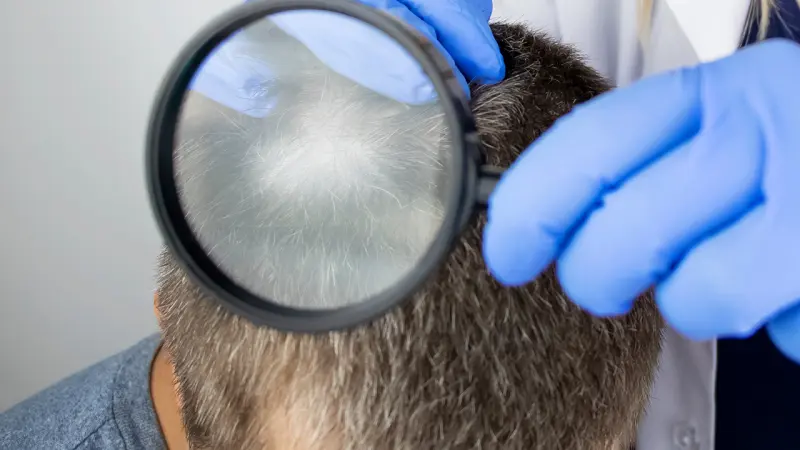
In its essence, alopecia areata is an autoimmune response. The immune cells in your body attack hair follicles, which are healthy in the first place, but can’t produce hair anymore after the development of the condition.
- There is a genetic component also; you’ll be likely to experience it when a close blood-related relative had alopecia areata.
- Usually, the role of stress is that it’s a trigger (i.e., brings forth the symptoms and/or their worsening at the time of a flare-up in people who are already predisposed to the condition), rather than a causative agent.
- It is quite common alongside other autoimmune disorders, such as thyroid disorders or vitiligo. That is why a thorough examination is always conducted by the dermatologist of the patient’s medical history for signs of other related conditions.
Recognizing the different causes of alopecia will allow for an efficient and personalized approach for the management and treatment of alopecia areata.
Myths – These habits are commonly blamed but have nothing to do with alopecia areata:
❌ Using the “wrong” shampoo
❌ Applying or skipping hair oil
❌ Wearing caps or helmets regularly
None of these cause alopecia areata. So, there’s no reason to feel guilty about your everyday hair care routine if you get afflicted with the condition.
Once you understand the cause, the natural next question is what actually works to treat it.
Which Alopecia Areata Treatment Works Best?
No single treatment suits everyone with alopecia areata, which is why a consultation matters more than a quick fix.
Your dermatologist decides on the best treatment for alopecia areata based on how many patches you have, how long you’ve had them, whether they’ve come back before, and your age.
A teenager with one small patch gets managed differently than an adult with recurring, widespread patches. This is what Dr. Rizwana Barkat, an alopecia areata specialist in Patna, focuses on: tailoring the plan to you instead of applying a template.
| Treatment Option | Best Suited For | Goal | Who May Benefit |
| Topical Corticosteroids | Mild, localized patches | Reduce inflammation | Patients with a few small, recent patches. |
| Intralesional Steroid Injections | Small to moderate patches | Promote faster regrowth | Patients with limited scalp involvement. |
| Topical Immunotherapy | Widespread or resistant patches | Stimulate hair regrowth | Patients who do not respond to first-line treatment. |
| PRP (Platelet-Rich Plasma) | Supportive hair regrowth therapy | Support follicle health | Selected patients with stable alopecia areata. |
| GFC (Growth Factor Concentrate) | Early or stable hair loss | Improve hair density | Patients suitable for regenerative hair therapy. |
| Oral Medications | Extensive or rapidly progressing cases | Control disease activity | Patients with widespread or recurrent alopecia areata. |
| Combination Therapy | Recurrent or difficult cases | Improve treatment outcomes | Patients requiring a personalized treatment plan. |
If you’re exploring regenerative options specifically, our comparison piece on GFC vs PRP for hair loss can help you weigh the two options.
Talk to Dr. Rizwana Barkat About Your Treatment Options →

What Affects Treatment Success?
How well you respond to treatment isn’t random. A few practical factors shape the outcome.
- How long you’ve had the hair loss matters, since patches present for months tend to respond more slowly than fresh ones.
- Patch size and number count too. Smaller, fewer patches generally recover more easily.
- Age plays a part as well, with results varying between children, teenagers, and adults.
- Timely treatment gives your follicles the best chance to respond before the immune attack sets in more firmly.
These factors help set realistic expectations from the start, even though they don’t guarantee a specific outcome.
Can Hair Grow Back After Alopecia Areata?
The answer is yes. In fact, many people have successfully regrown their hair, which is a great reason why compared to other permanent hair loss causing conditions, the prognosis of alopecia areata remains very encouraging.
But it is worth noting that a recurrence can happen and therefore, one or several bald patches may reappear even if hair previously grew back successfully.
The earlier you undergo treatment, the more chance you have of getting better, which is the reason why most of the time, waiting only makes the problem get worse.
It is also important not to forget that consistent and timely follow-ups with your dermatologist, in addition to primary treatment, are equally crucial.
That’s because as factors affecting hair loss changes, so too will the effectiveness of treatment and therefore, regular changes to a treatment plan might be necessary to achieve the desired results.
Though results can vary significantly from one person to another, keeping in touch regularly with your care team can give you a variety of possible treatments to choose from if necessary.
When Should You Visit a Dermatologist?
Not every extra strand on your pillow means alopecia areata, but certain signs call for a proper check-up instead of waiting it out.
Book an appointment with a dermatologist for alopecia areata if:
- Hair loss has lasted more than two weeks
- A patch is visibly increasing in size
- You notice multiple patches forming
- Your eyebrows are thinning or falling out
- Your beard shows bald patches
- You’ve had a previous episode that’s come back
Catching these signs early gives your dermatologist more room to act effectively.
FAQs
1. Which doctor is best for alopecia areata?
Dr. Rizwana Barkat, a dermatologist experienced in autoimmune hair loss, is a trusted choice in Patna.
2. How much does alopecia areata treatment cost?
Alopecia areata treatment cost varies depending on severity, patch count, and the treatment method chosen. Your dermatologist can quote this after evaluation.
3. Which treatment is best for alopecia areata?
There’s no universal “best” option. Steroids, immunotherapy, or PRP may be recommended depending on your case.
4. Is alopecia areata contagious?
No, it’s an autoimmune condition and can’t spread from person to person.
5. Will I recover from alopecia areata?
Many people see regrowth with treatment, though results and timelines vary by individual.
6. Is alopecia a serious problem?
It isn’t dangerous to your general health, but it can affect confidence, so timely care is still worth it.
7. Is alopecia areata permanent?
Not necessarily. Many patients regrow hair, though recurrence can happen in some cases.
8. Can hair grow back naturally?
Yes, mild cases sometimes regrow hair on their own, though treatment often improves the odds.
9. Does PRP work for alopecia areata?
PRP can support regrowth as part of a broader treatment plan, especially alongside other therapies. Our PRP Hair Treatment page explains the procedure in more depth.
10. How many treatment sessions are required?
This depends on your patch size and severity. Your dermatologist will outline a session plan after your first visit.
Don’t Ignore Patchy Hair Loss
Patchy hair loss treatment works best if you are diagnosed and treated early rather than spending the whole time guessing and hoping you’ll figure out what is going on with you.
If you notice bald spots, thinning of the eyebrows, or a beard patch that appeared overnight, refrain from making a diagnosis based on what you see online.
It is important that you arrange for a consultation with Dr. Rizwana Barkat who will be able to offer a professional diagnosis and come up with a customized treatment program based on your individual needs, disease history, and desired goals.
In whatever situation you may be, whether you’re newly experiencing alopecia and looking into alopecia treatment in Patna for the first time or you need treatment advice or you have just relapsed and want a new perspective after going through several treatment plans in your area, getting professional insight early is one way to significantly reduce the level of stress involved.


