








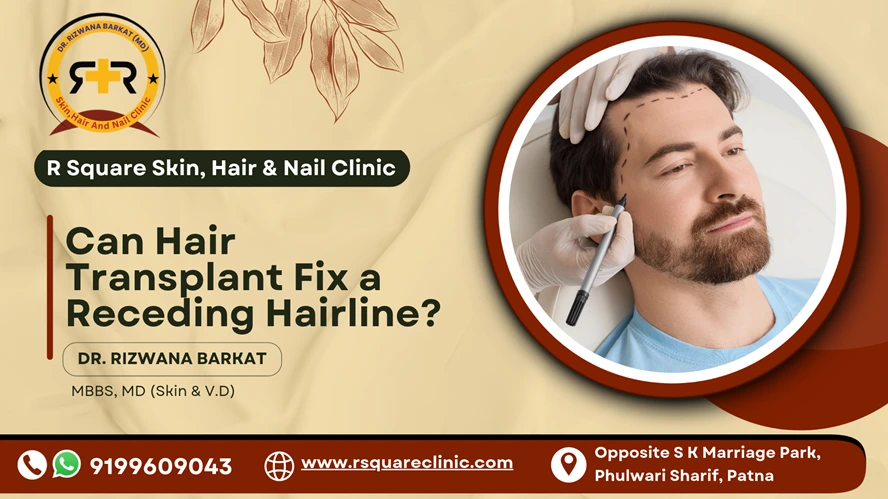
It is quite common for an individual to catch sight of a receding hairline in the mirror as a first indication of hair loss. In fact, the person hardly realizes it as the process is gradual and almost undetectable, except through observation from time to time.
The temples move back slowly, the M shape gets even more defined, the forehead looks wider than before. So, can a hair transplant cure a receding hairline? For suitable candidates, definitely.
The end result will largely depend on the amount of hair that’s already been lost, the stock of donor hairs still on hand, and whether there is still continued loss of hair.
Before you decide if a transplant is right for you, it helps to know how the procedure works, how much it can realistically restore, and what else you could try.
Can a Hair Transplant Actually Restore a Receding Hairline?
In a hair transplant, healthy follicles are taken from a donor area, usually the back or sides of your scalp. They’re then implanted along the frontal hairline and temples to rebuild the areas that have receded.
It is also helpful to know what a transplant can’t do. It restores hair in the treated areas, but it won’t stop the rest of your hair from thinning. The result depends on your donor hair quality, how far the recession has gone, and how realistic your expectations are.
That’s why a proper assessment should come before any decision. If you’re considering a hair transplant in Patna, get your scalp, donor area, and pattern of hair loss examined first.
Key takeaway: A transplant can bring back hair in receded areas, but it can’t prevent future hair loss in the areas it doesn’t treat.
What Does a Receding Hairline Look Like at Different Stages?
Doctors usually describe male pattern hair loss using the Norwood scale. It’s a simple way to see where your hairline stands and how far it may go.
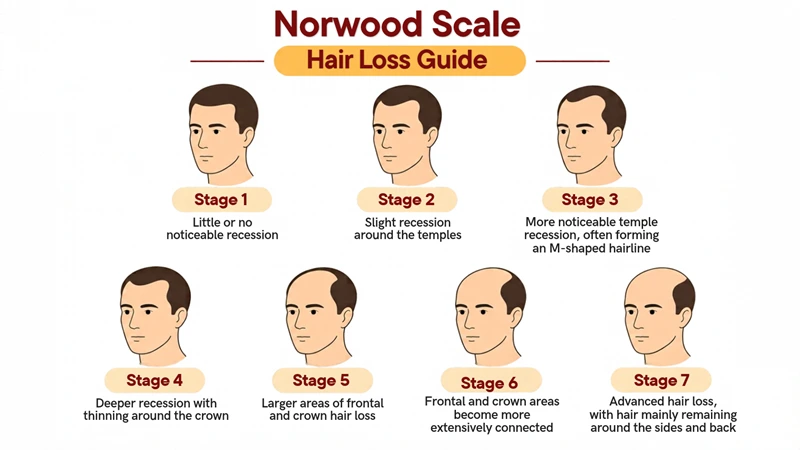
The scale is mainly meant for male pattern hair loss, so it won’t fit every type of hair loss. Think of it as a guide, not a diagnosis.
How Many Hair Grafts Are Needed to Fix a Receding Hairline?
In transplant surgery, the dermatologist transplants hair in small units. A graft is a small unit of tissue taken from the donor area. It might include either one hair follicle or more.
The quantity required will depend on the size of the section where you are having hair loss, the thickness of your hair present already at that region, the supply of healthy donor hair (and, perhaps, you may want a natural looking hairline that you can see as soon as you look in the mirror).
A higher number of grafts does not guarantee a better or a more natural looking result. Two individuals with similar types of bald lines can require different quantities of grafts. Hence, there isn’t a “fixed figure” suitable for all. The only safe method of estimating your needs is by conducting a scalp examination.
>> Get your scalp evaluated at R Square Clinic.

What Makes a Hair Transplant Look Natural?
A natural result comes from careful planning. Packing in as many grafts as possible doesn’t get you there.
1. Age Appropriate Hairline Design
A very low or straight line of hair can look rather unnatural, especially when you are older. It will also look rather unnatural if the bald pattern continues later on.
A thoughtfully designed hairline will retain its slightly irregular margin while also taking your face and age into account.
2. Hair Direction and Implantation Angle
Follicles have to be placed at the right angle and direction so they follow the way your hair naturally grows. Get the angles wrong and the hairline can look pluggy or unnatural.
Even small differences in placement can affect how naturally the transplanted hair blends with your existing hair.
3. Balanced Hair Density
Coverage of the grafts determines the end aesthetic. Generally, density is kept gentle up front and slowly increases behind, creating a believable transition between hair and skin.
The aim is to provide even coverage over the scalp without too many grafts being piled up in just one spot. This also helps the transplanted hair blend better with the surrounding hair as it grows.
Ultimately, a natural looking hair transplant depends on the right hairline design, placement, and graft distribution and not simply the number of grafts used.
At R Square Clinic, Dr. Rizwana Barkat evaluates patients seeking hair thinning treatment in Patna, considering their individual hair loss patterns and facial features before recommending a suitable hair restoration plan.
FUE or FUT: Which Is Better for Receding Hairline Restoration?
FUE and FUT are the two main techniques, and neither is automatically better for everyone.
| Factor | FUE | FUT |
|---|---|---|
| Extraction method | Individual follicular units are extracted | A strip of scalp is removed and divided into grafts |
| Scarring | Small dot-like scars | A linear scar |
| Recovery | Often involves smaller extraction wounds | Requires healing of the linear incision |
| Suitability | Depends on donor area and treatment goals | Depends on donor area and treatment goals |
The right choice comes down to your scalp condition, donor supply, goals, and what the treating surgeon finds on assessment.
What Happens After a Hairline Transplant?
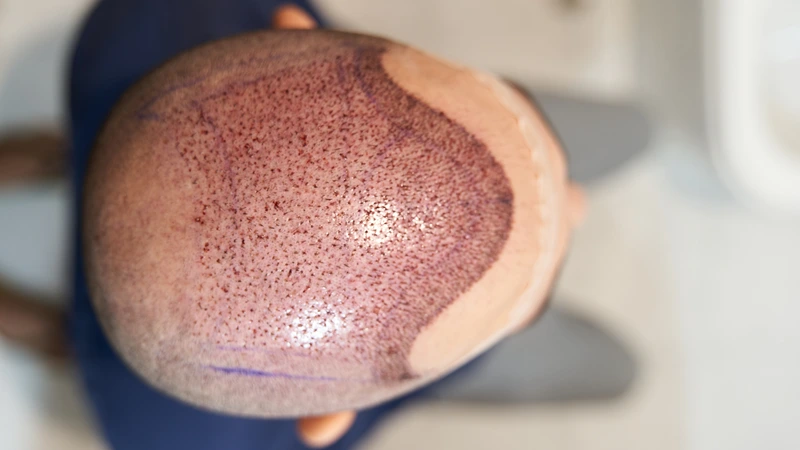
Recovery takes time, and the early weeks can look worse before they look better. Here’s roughly what to expect:
- First 1–2 weeks: Scabbing, redness, and healing around the treated area
- First few weeks: The transplanted hair may shed, which is generally expected
- 3–4 months: Early hair growth may begin
- Around 6 months: More visible growth may develop
- 9–12 months: Results become clearer, although some people need longer
These timelines differ from person to person. Follow your dermatologist’s aftercare instructions closely, since they support both healing and growth.
Can Your Hairline Recede Again After a Hair Transplant?
The transplanted hairs usually won’t, but the hair around them still can.
Transplanted follicles generally keep the traits of the donor area, so they tend to last. Your existing, non-transplanted hair is a different story, because it may keep thinning.
Over time, that can leave you with uneven density or a new recession pattern around the transplanted zone. This is one reason a dermatologist may suggest long term hair loss management alongside the transplant, depending on your condition.
>> Book a consultation with Dr. Rizwana Barkat for long-term hair restoration guidance.
What If You Are Not Ready for a Hair Transplant? Non-Surgical Treatment Options
Surgery isn’t your only route. Some people aren’t suitable candidates, and others just want to try other treatments first.
Minoxidil and Finasteride
Premedications like minoxidil and finasteride are routinely used in slowing balding and encouraging hair regrowth at the spot that they are used.
Minoxidil supports hair growth and may improve hair density. Some people notice extra shedding in the first few weeks, and scalp irritation can also happen.
Finasteride works differently. It lowers DHT, a hormone linked to male pattern hair loss, so your follicles are under less pressure. It’s generally prescribed for male pattern hair loss and isn’t right for everyone.
They are drugs, so you need to go under a physician’s supervision, and they are not suitable for all persons, so they must be started only at the dermatologist’s advice.
PRP Treatment
PRP uses platelet-rich plasma prepared from your own blood. It may be considered in selected cases of hair thinning.
The idea is that the platelets and their growth factors may help improve hair density in selected cases of thinning. Results build up slowly, so doctors usually recommend a series of sessions, followed by maintenance sessions if needed.
If you’re exploring this treatment, understanding the PRP hair treatment cost in Patna can help you plan your treatment based on the sessions and approach recommended by your dermatologist.
GFC Treatment
Growth Factor Concentrate (GFC) is also made from your own blood. The sample is processed so the growth factors are concentrated, and the plasma is then injected into your scalp, much like PRP.
It may help support hair growth in some people. The evidence is still limited, though, and we need larger, better designed studies before we can say how well it works.
PRF Treatment
Platelet-Rich Fibrin (PRF) is another blood-derived treatment. Unlike PRP, it’s prepared without anticoagulants, and the blood is spun more gently. You end up with a fibrin matrix that holds platelets and growth factors, which may release them more slowly.
Understanding how PRF and PRP treatments differ in preparation is useful when you’re deciding between them, and it can be considered in selected hair-loss cases. As with GFC, current research is limited, so it’s not a proven solution for everyone.
Low-Level Laser Therapy (LLLT)
Low-level laser therapy uses low level light energy to stimulate cells in your scalp. Some people with pattern hair loss may see better hair density with it.
You need regular sessions in a clinic, or regular use of a home device, to keep any benefit. It’s generally treated as a supplementary option alongside other treatments, not a standalone fix.
These treatments may help slow hair loss or improve hair density in selected cases, but they cannot reliably restore a completely receded hairline. They are useful options for managing certain hair loss concerns, but they are not guaranteed replacements for a hair transplant.
Why Consider R Square Clinic for Hair Restoration Guidance?
At R Square Clinic, Dr. Rizwana Barkat and our team assess each person’s hair and scalp concerns individually before suggesting treatment.
We offer advanced treatment options and personalised guidance on hair restoration and non-surgical approaches based on your condition.
Before recommending a hair transplant, Dr. Rizwana Barkat looks at a few things:
- The cause and pattern of your hair loss
- Whether the hair loss is stable or still progressing
- Donor hair availability and quality
- Scalp health and medical history
- Your age, expectations, and long-term goals
If you’ve noticed receding hairline in Patna, then the first thing is to go get diagnosed so that it can be checked out whether or not your hair loss is going to stabilize soon.
A proper assessment by a dermatologist in Phulwari Sharif or a nearby clinic can help identify the cause before any procedure is planned.
FAQs
1. Can a hair transplant restore an M-shaped hairline?
It may help restore the receded temple areas in suitable candidates.
2. Can someone in their 20s get a hair transplant?
Age alone doesn’t decide it. How far your hair loss has progressed and your long-term plan matter more.
3. Will transplanted hair look natural?
That depends on hairline design, graft placement, angle, and density.
4. How long do hair transplant results last?
Transplanted follicles generally keep the traits of the donor area, but the native hair around them may keep thinning.
5. Is 1 graft equal to 1 hair?
No, 1 graft is not equal to 1 hair. A single graft typically contains between 1 and 4 hairs (and occasionally 5).
Seeking Timely Care for Hair Loss
Depending on the suitable candidates, hair transplant can be an excellent way of getting one’s receding hairline back.
Still how well one recovers will depend largely on a number of things such as the hair loss cause, the loss rate, a person’s donor supply, and desired outcome.
If you’re not sure where you stand, book an appointment at R Square Clinic and get your hair loss assessed at a professional level before you decide on treatment.


