










Hair fall 3 months after dengue can be scary, especially if you’re otherwise feeling healthy and recovered from your illness. It’s common for people to experience excess hair in the shower, on their pillow, or on their comb several weeks or months after their dengue fever has subsided.
Having a serious illness like dengue can interfere with your normal hair growth cycle, which is why you’re seeing excess shedding months later. However, not all cases are caused by the same thing.
Many instances of hair loss will also resolve on their own without treatment, though the timeline for recovery will vary and no promises can be made. First, let’s understand the pattern.
In this blog we will explain why hair fall happens months after dengue and which treatment options can help when hair fall continues.
Why Does Severe Hair Fall Start 3 Months After Dengue?
Delayed shedding following an illness is very common. Our hair goes through a growth cycle where the majority of our hairs are growing at any given time while a smaller percentage are resting and waiting to shed.
If you’re experiencing severe shedding or shedding that doesn’t seem to stop, it’s worthwhile to get your hair checked by the best dermatologist in Patna and find out the root cause.
Here are some of the most common reasons for severe hair fall 3 Months after dengue.
Telogen Effluvium After Dengue
Think about how much stress your body goes through when fighting a serious illness. Increased stress can push more follicles into the resting phase because of it.
The hair doesn’t fall out right after the illness. Instead, it falls out two to three months later, which explains why many patients say their hair fall began when “everything was going back to normal.”
Telogen effluvium caused by dengue fever should always be considered when patients are shedding months after being sick, but scalp examination should always be performed before making this diagnosis.
Nutritional Deficiencies and Inadequate Food Intake
Not having much of an appetite for days or weeks can be common with dengue fever. Protein intake may decrease significantly during that time period as well.
Deficiencies like low iron can contribute to shedding after the fact. When patients come in our clinic with hair loss concerns after dengue, we always evaluate diet and symptoms first.
Afterwards, testing is performed based on their symptoms instead of ordering all patients the same blanket tests. Not everyone needs supplements, and taking them before knowing what your levels are can prevent you from finding the underlying cause of your hair loss.
High Fever and Physical Stress
An extended fever as well as the body’s reaction to that fever play a large role in delayed shedding.
Many patients can experience several days of high fevers with Dengue. Fatigue and decreased food intake accompanies these fevers which also stresses the body.
Your hair follicles respond to this stress and you see the effects of that battle several weeks later after the illness itself is long gone.
Pre-existing hair-loss Conditions
Dengue can make us aware of hair loss that was already present, like pattern hair loss. It’s only when your hair becomes thin after a stressful illness that you may realise it’s been progressing slowly behind the scenes for months or years.
At R Square Skin, Hair & Nail Clinic we check for these conditions because permanent or progressive thinning has a completely different treatment approach to temporary shedding. Viewing it only as post-dengue shedding could leave an underlying condition untreated longer than necessary.
Other Medical Conditions or Ongoing Health Issues
There are a number of ongoing health issues that can cause hair loss, like thyroid disease. If there’s reason to suspect this based on your medical history and symptoms, then it is recommended to get a blood test to rule these out before deciding dengue is the cause.
This is important because treating an underlying condition is what allows the hair cycle to normalise. Many patients feel reassured getting these checks done, even if dengue alone turns out to be the culprit.
Hair fall that occurs only after dengue might be caused by dengue, but hair fall that occurs around the same time as dengue might need further assessment.
>> Book an Appointment for Proper Diagnosis at R Square Skin, Hair & Nail Clinic.

How Can You Tell If Hair Fall After Dengue Is Telogen Effluvium?
Hair Shedding may start 2-3 months after major illness like dengue. Keep an eye out for these signs to know if your hair fall after dengue is telogen effluvium:
- Widespread hair shedding: Telogen effluvium tends to cause shedding across your entire scalp rather than loss from a small area.
- Delayed hair fall: When you’re ill your growth cycle is affected and so you will notice shedding weeks or months after you’ve recovered.
- Overall thinner hair: Heavy shedding can make your hair appear thinner overall, this varies from person to person.
- Signs that may indicate something else: Well defined bald spots, thinning hair that continues to decrease or an expanding hair part. These are causes for concern and you should seek an evaluation, however these signs don’t establish a diagnosis on their own.
Keep in mind that these are just clues about what may be causing your hair loss. They can’t diagnose the cause by themselves. If you are concerned you may need an evaluation from a qualified dermatologist to see what is really going on.
How Long Does Post-Dengue Hair Fall Last?
In most cases of telogen effluvium, hair shedding may persist for weeks or even a couple of months before it begins to taper. New hair enters the growth phase slowly, so it can take a few more months before you’ll see improvement in hair density.
Keep in mind recovery time will vary based on your nutritional status, if illness is still ongoing, or if another scalp condition is contributing to hair loss. A guaranteed recovery date can not be expected since it depends on the underlying cause and other factors that may continue to negatively influence your hair cycle.
If your hair shedding persists or worsens during this time, it should be reevaluated by a professional.
How To Manage Hair Fall After Dengue?
Supportive care is all about keeping your hair in good health, though it may not have an immediate effect on telogen effluvium induced shedding. Consider implementing these practices into your routine:
- Eat well-rounded meals that include protein and vary your intake of key nutrients.
- Discuss possible deficiencies with a clinician before taking supplements.
- Limit heat styling and avoid tight hairstyles or harsh chemical processes.
- Practice gentle hair care techniques.
- See a dermatologist if your symptoms are severe or you have excessive hair shedding that lasts longer than 3 months.
Ultimately, these tips can help you create an environment for your hair to recover, but there’s no magical oil, shampoo or pill to cure dengue hair fall on its own.
>>> Book your consultation at R Square Clinic to find the right approach to post-dengue hair fall.
Treatment of Hair Loss After Dengue
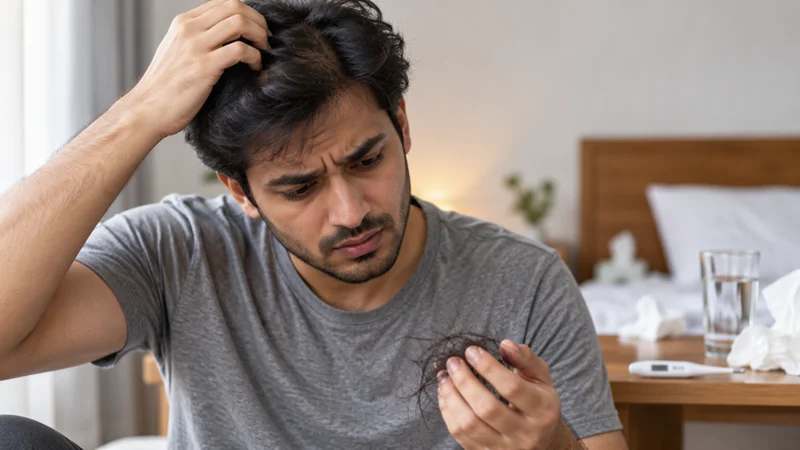
Treatment of hair loss depends on the cause regardless of how many hairs you lose. The first step is identifying factors that may be contributing to your hair loss, treating the underlying condition and then monitoring recovery.
Here’s how management differs depending on the cause of your hair fall.
Telogen Effluvium Following Dengue
Since telogen effluvium is usually temporary hair shedding, it will begin to get better as the normal cycle corrects itself.
Often times no specific hair loss medications are required and watchful waiting along with having realistic expectations can go a long way. Although hair shedding may subside before you actually see hair regrowth, hence it may take time for your hair density to return to normal.
Treating Deficiencies
If your diet is lacking or you have proven deficiencies that could be causing your hair loss like low iron levels, eating a well-balanced diet that includes enough protein and other nutrients can promote normal hair growth.
If necessary a blood test and supplements may be recommended though it is not necessary for everyone.
Treating Other Underlying Causes of Hair Loss
Telogen effluvium can also occur with other causes of hair loss such as thyroid issues or underlying genetic hair loss. If hair shedding continues we can recommend further testing and treatment that is specific to your condition based on your history, physical examination and labs.
Schedule an appointment with R Square Skin, Hair & Nail Clinic for hair loss treatment in Patna that focuses on finding the root cause of your hair fall.
Are Hair-Growth Procedures Necessary After Dengue?
PRP therapy and GFC are not standard of care for acute telogen effluvium. They may be recommended in addition to other treatments if an evaluation reveals another diagnosis, like androgenetic alopecia (pattern hair loss), in which PRP is indicated.
GFC may be offered as an option for select hair-loss issues, but evidence is still emerging. Don’t assume you need either of these procedures just because you started shedding after having dengue.
Simple telogen effluvium often resolves on its own after a period of time. If you are continuing to lose hair or feel that it’s worsening, or if hair loss is accompanied by a receding hairline or bald spots, reach out to a dermatologist to see if any treatment or further workup is needed.
When Should You Consult a Dermatologist?
Patients might consider seeing a professional dermatologist if:
- Their shedding has persisted or is severe.
- They aren’t seeing signs of hair regrowth.
- They notice bald spots or hair loss in a particular area.
- They have scalp irritation or other symptoms they can’t explain.
- If considering medication, PRP hair treatment or GFC without knowing the cause.
Remember that these signs and symptoms do not automatically mean you have a certain diagnosis. Seeing a dermatologist for an in person evaluation is always better than taking medication or getting a procedure done without knowing the cause.
Dr. Rizwana Barkat at R Square Skin, Hair & Nail Clinic, Patna reviews your hair and scalp to narrow down the possible cause before proceeding ahead with the treatment.
She analyses your condition and decides the treatment plan according to the clinical condition of the patient. Because temporary shedding of hair post dengue needs to be differentiated from hair loss due to nutritional deficiency or other scalp disorders which need to be managed differently.

Frequently Asked Questions
1. Is severe hair fall after 3 months of dengue normal?
Yes. Delayed shedding after serious illness is common and sometimes expected but may still need evaluation if excessive/severe.
2. Will my hair grow back?
Yes, usually in shedding that is temporary although timing can vary and there can be cases with no regrowth.
3. Can dengue cause permanent hair loss?
No. Dengue doesn’t usually cause permanent hair loss. If you’re experiencing continued hair loss there may be another underlying condition that needs evaluation.
4. Should I take biotin?
Not usually. It’s best to discuss with your clinician first.
5. Can minoxidil help?
It works well in certain cases but not all cases of temporary shedding.
6. Do I need PRP / GFC?
Not every case. These are usually performed selectively after a consultation.
Get Expert Help for Persistent Hair Fall at R Square Clinic
Hair loss after dengue fever is usually temporary but if you have concerns due to severe hair fall or hair fall that isn’t settling after a few months, it is worthwhile getting that evaluated.
Here at R Square Clinic, your hair and scalp evaluation starts with your medical history related to your illness, followed by thorough examination of your scalp and hair and performing any tests we deem necessary to arrive at a diagnosis.
Our goal is to understand what’s causing your hair fall so we can ensure that any treatment we recommend is targeted to help you. Treatments are personalized to you and your goals, but we never promise unrealistic results.
Consult with Dr. Rizwana Barkat to know the cause of persistent hair fall after dengue fever and understand your treatment options.


