





dYour nails tell you things. When they change colour, thicken, crack, or peel away from the nail bed, something’s going on underneath. Nail disorders range from fungal infections and ingrown toenails to psoriasis and bacterial inflammation. Most respond well to treatment if you catch them early enough.
Here’s the problem though: what works for fungal problems won’t work for psoriasis, and what helps psoriasis might make a fungal infection worse. That’s why accurate diagnosis actually matters.
Key Takeaways:
- Nail disorders require accurate diagnosis because treatments differ based on the underlying cause.
- Fungal infections, ingrown toenails, psoriasis, paronychia, and onycholysis each need specific approaches.
- Early treatment prevents complications and improves outcomes.
- R Square Skin, Hair & Nail Clinic provides expert dermatological care backed by the expertise of Dr. Rizwana Barkat.
- Contact Dr. Barkat for evaluation if you notice persistent changes in your nails.
At R Square Skin, Hair & Nail Clinic, we know that nail disorder treatment in Patna requires tailored approaches based on what’s actually affecting you. The good news: identifying the root cause and starting treatment early prevents complications and helps restore healthy nails.
Nail Disorder Treatment in Patna: Accurate Diagnosis Is Where Everything Starts
In order to diagnose your problem accurately, a dermatologist will:
- take a very close look at your nails
- ask you a series of detailed questions about your symptoms
- order lab tests, if necessary, to identify the exact problem
>> Consult Dr. Rizwana Barkat for Nail Disease Assessment
Since the treatment is determined by the root cause of the problem, a fungal infection, for example, requires a different treatment (antifungal therapy) than an ingrown toenail (may require a minor procedure) or psoriasis (systemic treatment).
Actually, combined approaches are what are effective for most nail disorders.
Your dermatologist, for instance, can give you topical medications (creams or nail lacquers) for mild cases, oral medications for deep fungal infections involving multiple nails, or minor surgical procedures such as nail avulsion or drainage, when conservative care cannot yield desired results.
Along with following the dermatologists’ direction, you can make a real difference to your recovery by taking proper care of your nails and maintaining good hygiene.
Seeing a qualified dermatologist doctor in Patna ensures your nail disorder treatment matches your specific condition rather than relying on guesswork or over-the-counter products.
The right approach depends on getting the diagnosis right first.
Common Nail Disorders That Need Treatment
Most nail problems follow patterns you can recognize. Getting them checked early means getting the right care faster. Whether you’re dealing with fungal infections, persistent thickening, or nail separation, understanding what’s happening is the first step.
Even nail biting disorder treatment starts with diagnosis to rule out underlying conditions. Here are the conditions we see most often at the clinic.
Note that what matters most is getting the right diagnosis so treatment can start working immediately.
1. Fungal Nail Infection (Onychomycosis)
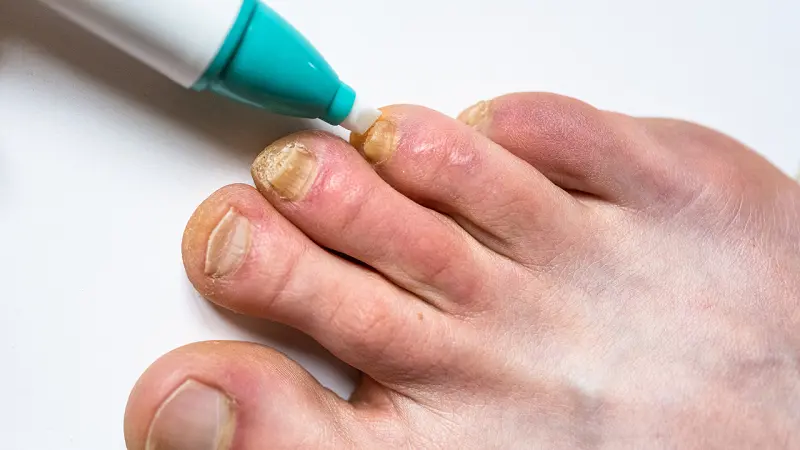
Fungal nails can be very resistant. Initially, you may observe thickening of the nail to the extent that it is quite difficult to trim it, discoloration in the form of yellow or brown nails and brittleness leading to crumbling of the nails at the edges.
The infection is inside the nail, that is why, topical treatments only, are habitually, not successful. Nail fungus treatment in Patna consists of administration of oral antifungal medications along with proper nail care. Treatment duration is measured in months as nails grow very slowly.
However, one of the benefits of early treatment is that the fungus may not have the opportunity to spread to the other nails or become a chronic problem.
2. Ingrown Toenail
When the edge of a nail starts to curve into the skin beside the nail, an ingrown toenail ensues. You feel the pain especially when you wear shoes and while walking as well. The skin is red and swollen. If bacteria is involved, then the area will be warm and there may be pus.
Subjecting the affected nail to medicated soak may be effective and is also a part of the ingrown toenail treatment program at the clinic. If the painful problem continues, a minor procedural removal of the problematic section under local anesthesia is the best way to solve the problem.
Additionally, proper nail cutting, in a straight line, not curved, is the best method to prevent a recurrence and is a lot simpler than dealing with the complications later.
3. Nail Psoriasis
Psoriasis may not only be limited to skin. Psoriasis changes in nails are manifested by particular small pits, which are spread over the surface of the nail like if someone poked them with a pin.
The nail becomes thicker and sometimes separates from the nail bed. Besides that, the nails get discoloured and the texture becomes crumbly.
Managing the condition with topical and systemic corticosteroids can show good results in Psoriatic nails. Psoriasis care in general is the mainstay in recovery.

4. Paronychia
Paronychia is a problem with the skin around the nail rather than the nail itself. Acute paronychia is a fast attack of infection that usually gets in through a hangnail, nail biting, or an unintentional injury during a manicure. The skin gets inflamed (red), swollen, and painful.
Chronic paronychia is the long-lasting form and results from the continuous exposure to water or irritation. For instance, dishwashers, cleaners, and healthcare workers (whose hands are wet most of the time) are the most affected ones.
The treatment mainly comprises keeping the affected part dry, taking antibiotics in case of acute paronychia, and removing the cause of irritation in case of chronic paronychia.
5. Onycholysis
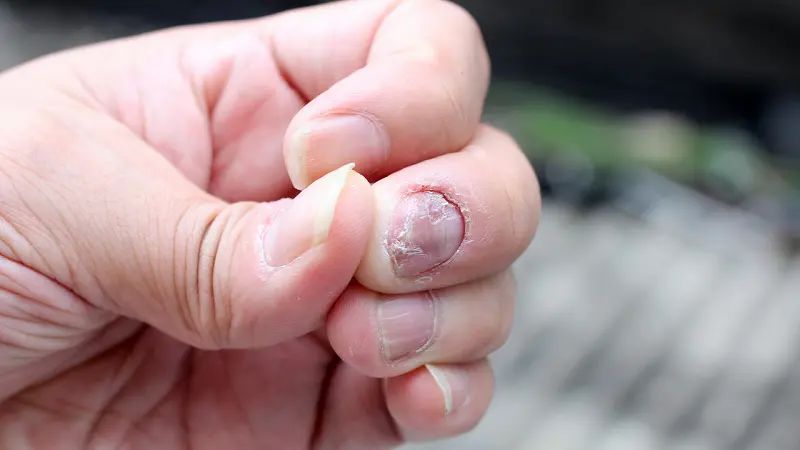
Onycholysis is when the nail starts peeling away from the nail bed.The nail detaches bit by bit, creating a hollow area underneath that sometimes looks white or yellowish.
It can be caused by any of these: injury, fungal infection, psoriasis, and very rarely, thyroid disorders.
After separation, the nail cannot be reattached to the nail bed. If a nail detaches, the aim is to prevent further detachment and allow a new nail to grow. It will take a few months since nails grow about 3 mm per month.
However, the real difference comes when diagnosis and treatment align precisely with what’s actually happening.
>> Book consultation with Dr. Rizwana Barkat today!
How Nail Disorders Are Diagnosed and Treated?
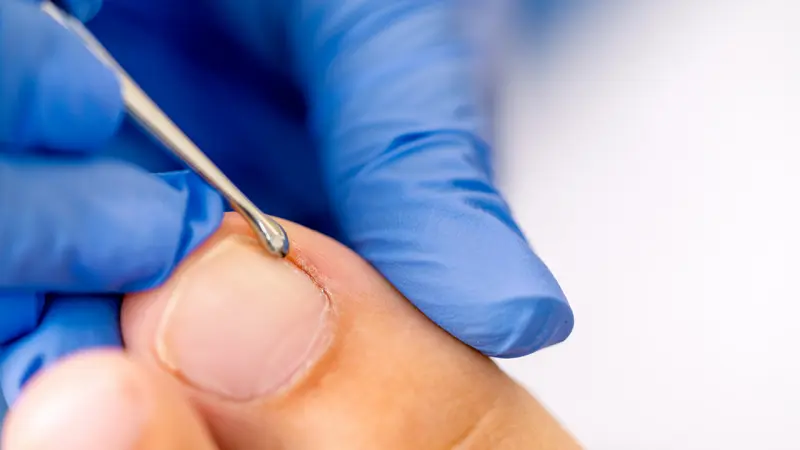
Diagnosis starts in the clinic and sometimes continues in the lab. Treatment matches the diagnosis precisely.
1. Clinical Examination
First, your dermatologist will observe the shape, colour, and texture of the nail, as well as whether it is lifting off the bed. They will also look for signs of redness around the nail and if several nails are involved.
This visual examination alone can greatly help in the diagnosis. Besides that, inquiring about your symptoms, duration, pain, and whether other family members have similar issues are the most valuable clues that determine the direction of the investigations.
2. Laboratory Tests
When clinical appearance isn’t enough, lab work confirms the diagnosis. For suspected fungal infections, the dermatologist takes nail clippings or debris from underneath the nail.
These go to the lab for fungal examination under the microscope and culture to identify which fungus is causing trouble.
Culture results take time but matter because different fungi respond to different medications. This precision prevents wasted time on ineffective treatments.
3. Medical Treatment
Topical medications work best for surface infections and early-stage problems. Nail lacquers penetrate the nail better than regular creams.
For infections deeper in the nail or those affecting multiple nails, oral medications become necessary. Oral antifungals circulate through your bloodstream and concentrate in the nail tissue.
Your dermatologist prescribes based on what the lab found and your overall health. Some oral medications interact with other drugs, so disclosure matters.
>> Visit R Square Clinic for a Complete Diagnosis
4. Minor Procedures
Usually, if you have not achieved the desirable results from the conservative treatment, minor procedures may help. Nail avulsion eliminates the diseased nail, allowing a healthy one to grow in its place.
Although it sounds quite terrifying, nail removal is in fact the fastest way to get your nails back to normal if they have been severely infected for a long time.
With the removal of the partial nail only the problematic edge of an ingrown toenail is taken away. Draining the area to relieve pressure and infection of paronychia is also a useful measure. These simple treatments can be carried out in the clinic under local anesthesia with little discomfort.
When Should You Visit a Dermatologist?
If you have nail issues, don’t let them go on and wait around hoping it will resolve on its own. Nail discoloration that lasts for several weeks is a sign that something is wrong and you should get checked.
Pain while walking and other daily activities is a sign that you have to get checked right away. Thickened nails are one of the most common symptoms of a fungal infection or psoriasis, both of which require a course of treatment.
If your nails start to lift, it’s a sign that the damage has been progressing and you need to take measures. And if you keep on getting infected, it might be a sign that your immune system needs a boost or the environmental factors around your nails need to be changed.
If your nail suddenly deforms with ridges, pitting, or shape changes, call Dr. Rizwana Barkat for consultation. Immediate treatment will help you avoid complications such as permanent nail damage, spreading to other nails, or secondary bacterial infections.

Concerned About Changes in Your Nails?
If you’ve noticed persistent nail discoloration, thickening, pain, or changes in nail shape, don’t ignore them. Early evaluation identifies the underlying cause and guides appropriate treatment. Nail disorders respond best when caught early, before damage becomes severe or spreads.
Dr. Rizwana Barkat (MBBS, MD Skin & V.D.) at R Square Skin, Hair & Nail Clinic specializes in nail disorder treatment in Patna. She has extensive experience managing fungal infections, psoriasis-related nail changes, and ingrown toenails.
Her approach combines precise diagnosis with practical treatment tailored to your needs. Book Your Consultation With Dr. Rizwana Barkat Today!
Get proper diagnosis and personalized nail disorder treatment. Contact R Square Skin, Hair & Nail Clinic at (+91) 9199609043.


One thought on “Nail Disorder Treatment in Patna: Common Conditions & Solutions”