






Facial pigmentation is one of the most common skin concerns dermatologists across India treat. In Patna specifically, intense sun, high humidity, hormonal shifts, and year-round pollution make it worse and harder to shift. Dark spots, uneven skin tone, a patch of melasma that keeps coming back: any of these can quietly erode your confidence.
The good news is that pigmentation treatment in Patna has become more precise and more accessible than it used to be. With the right dermatologist, your skin is treated based on what’s actually causing the problem, not a template protocol.
Also, not all facial pigmentation is the same, and not all treatments work the same way. What clears acne marks won’t necessarily work for melasma.
That distinction matters more than most people realise and consulting a qualified dermatologist is the most reliable way to figure out which kind of pigmentation treatment you should get.
✅ Consult Dr. Rizwana Barkat → Book Your Appointment Today
Best Treatments for Facial Pigmentation in Patna
Pigmentation doesn’t have one cause, and it doesn’t have one fix. The treatments available at specialised dermatology clinics in Patna each target different pigmentation types at different depths.
1. Chemical Peels
A chemical peel uses an acid based solution. Glycolic acid, salicylic acid, or TCA are common to exfoliate the top layers of skin and expose fresher skin beneath. It reduces dark spots, post-acne marks, and surface-level discolouration.
Moreover, chemical peel works best for mild pigmentation and offers skin brightening improvements with consistent sessions. In fact, there’s also a study published in the Journal of Clinical and Aesthetic Dermatology that found glycolic peels effective for postacne pigmentation.
What we offer: At R Square Clinic, the peel formula is selected based on your skin tone and sensitivity, not a default setting applied to everyone. To understand pricing, check out our guide to chemical peel treatment cost in Patna.
Chemical peels are a reliable entry point for surface pigmentation. For patches that sit deeper or resist peels, combining other treatments may work better.
2. Medical Skincare & Prescription Treatment
Over-the-counter creams seldom live up to what a prescription guided by a dermatologist is capable of delivering. Generally, prescription skincare for pigmentation relies on topical agents: hydroquinone (which should be used cautiously and only for short periods), azelaic acid, kojic acid, retinoids, or niacinamide formulations.
Such prescriptions are given only after determining your skin type, understanding the cause of pigmentation, and considering your medical history.
Keep in mind that indiscriminate use of potent actives can lead to your skin barrier getting damaged and, even more, results may worsen and skin gets aggravated in a big way.
What we offer: At R Square Clinic, prescription routines evolve as your skin needs changes; new ingredients, concentrations, and combinations are all part of the adjustments over time.
Prescription skincare may work best when integrated with other approaches like in-clinic procedures that help achieve quicker and more durable outcomes.
3. Microdermabrasion for Pigmentation
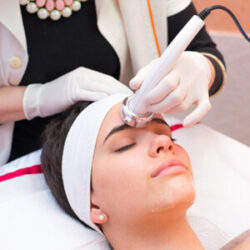
Microdermabrasion in Patna is a non-invasive procedure using fine crystals or a diamond-tipped device to physically exfoliate the skin surface. It removes dead outer skin cells, brightens the complexion, and reduces uneven tone and mild dark patches.
Note that this kind of pigmentation spots treatment in Patna doesn’t require aggressive intervention. No downtime, well-tolerated, and usually done across 4-6 sessions.
When paired with topical brightening agents, the results are even stronger. However, for deeper pigmentation, it won’t be sufficient on its own. But as a maintenance tool or complement to other treatments, it holds real value.
What we offer: All microdermabrasion treatments at the clinic are carried out under the supervision of the experienced dermatologist, Dr. Rizwana Barkat. The treatment steps are adjusted based on your skin’s response.
This is a nice non-invasive surface level treatment. But if surface treatments aren’t reaching your pigmentation, laser therapy may offer the precision that’s missing.
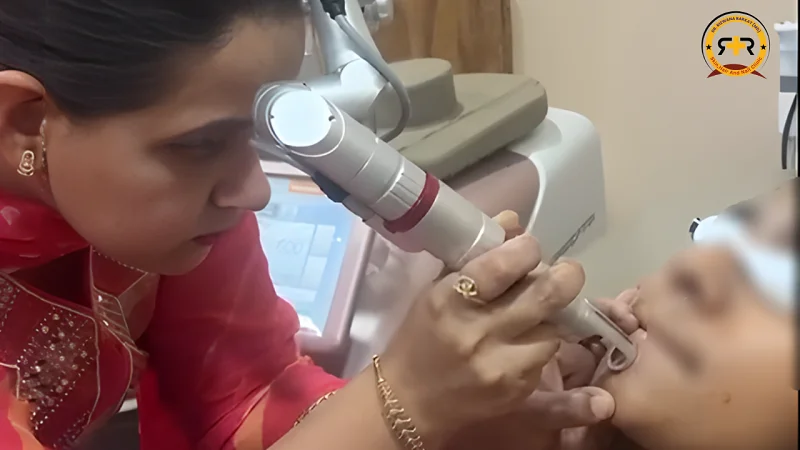
4. Laser Treatment for Pigmentation
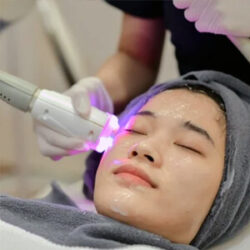
Laser treatment is a method where highly concentrated light energy is employed to break down melanin deposits so that they can be naturally eliminated by the body.
This option is most effective for removing pigmentation spots that are resistant, are present at a deep level, and have not responded to creams or peels.
The use of Q-switched laser has made it especially popular as an effective tool for treatment of melasma, sun spots and post-inflammatory hyperpigmentation.
Recent studies have also been conducted on this topic. The 1064 nm Q-switched laser treatment is identified as one of the preferred alternatives for removing skin lesions such as melasma (2023 review in Advances in Dermatology and Allergology).
When you decide to go for laser sessions to solve problems related to pigmentation, it is important to bear in mind that usually results are seen from the second or third session onwards. However, a full course can range from 2 to 8 sessions depending on the depth and severity of the condition.
What we offer: Equipped with the latest and globally recognized laser technologies worldwide, our senior dermatologist customizes the parameters according to your skin type and the type of pigmentation problem.
Laser is among the most targeted tools available. When combined with other therapies, it becomes even more effective.
5. Combination Treatments
Most people don’t hear this upfront but know that the best results for facial pigmentation treatment almost always come from combining therapies. A single treatment rarely addresses all layers – surface, mid-dermal, and deep.
That’s why a dermatologist may combine a chemical peel with the use of prescription skincare or may use medical-grade serums after the laser sessions to maintain the skin improvement and results.
Combination protocols matter especially for hyperpigmentation treatment in Patna as people are always susceptible to re-exposure of the skin to the sun, heat, and pollution.
What we offer: At R Square Clinic, combination plans are developed based on your exact pigmentation type, skin tone according to the Fitzpatrick scale, and daily lifestyle.

After exploring the options, your next logical question should be: what kind of treatment will your skin need to be free of skin pigmentation issues?
How to Choose the Right Pigmentation Treatment?
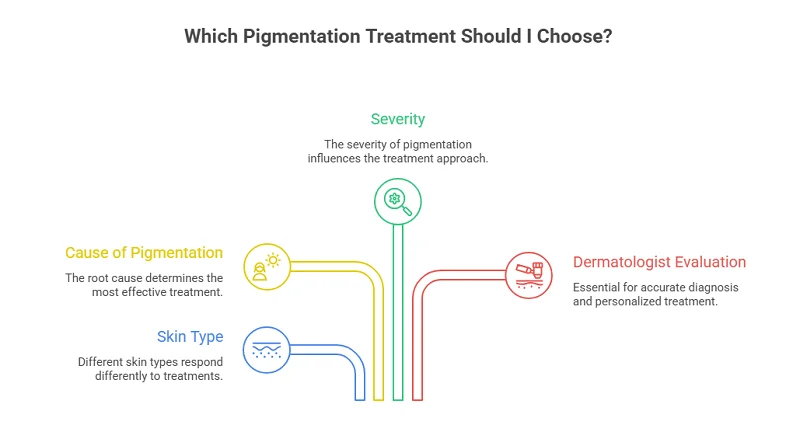
Treatment that suits your skin is not decided based on the latest trend but your actual skin condition. Dr. Rizwana Barkat at R Square Clinic considers a number of variables before deciding on the best course. Some of the major ones are:
1. Skin Type
The same treatment will affect different skin types like oily, dry, sensitive, and combination skin in different ways. For instance, certain types of peels may overly irritate sensitive skin.
Also for laser treatments, the settings have to be adapted when dealing with darker Indian skin tones to avoid darkening of the skin after the treatment.
2. Cause of Pigmentation
The reason determines the whole treatment. Sun exposure, hormonal changes (especially after pregnancy or as a result of taking contraceptives), acne scars, melasma, and aging are factors that cause different pigmentation patterns in the skin.
Sun-induced hyperpigmentation like dark circles exhibit characteristics that are quite different from those of pigmentation resulting from internal hormonal changes and treating one with the same method as the other rarely results in a successful outcome.
Expert dermatologists are aware of this and recommend the treatment only after they have taken the root cause of the problem into consideration.
3. Severity
Mild surface discolouration may respond to a few peel sessions. But deeper or more widespread anti pigmentation treatment needs laser combined with long-term maintenance. Going too aggressive for mild cases or too conservative for deep ones produces poor outcomes either way.
Personalized Dermatologist Evaluation is Essential
No online quiz replaces a trained eye. Dr. Rizwana Barkat employs a comprehensive dermoscopy examination during the initial consultation to distinguish between epidermal and dermal pigmentation, a distinction that completely changes treatment direction. You can see the full range of options on our anti pigmentation treatment in Patna page.
Skipping a proper diagnosis doesn’t save time. It usually costs more due to complications.
➜ Book a Consultation with Dr. Rizwana Barkat and Get a Personalised Pigmentation Plan.
Treatment Depends on the Type of Facial Pigmentation
Pigmentation doesn’t always appears the same. What it looks like depends on what’s causing it. A flat brownish patch across the cheeks is almost always melasma.
On the other hand, small dark dots on sun-exposed areas point to sun spots. A red-to-brown mark left after a pimple is post-inflammatory pigmentation.
Each of these needs a different approach, and the wrong treatment can worsen things rather than improve them.
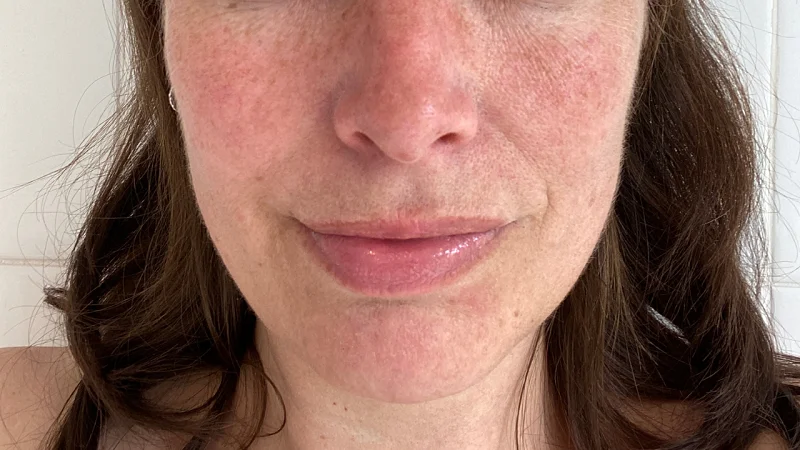
It’s also worth knowing that hyperpigmentation gets worse in winter for some people, especially those with melasma. Reduced sun awareness in cooler months leads to inconsistent SPF use, which leaves the skin barrier more vulnerable than people expect.
Here are some common types of pigmentation issues and what kind of treatment would suit each:
1. Melasma
Melasma treatment in Patna typically combines topical depigmenting agents like azelaic acid or tranexamic acid with low-fluence Q-switched Nd:YAG laser and strict sun protection.
It’s one of the harder types to treat because hormonal triggers can cause recurrence even after successful treatment.
2. Post-Inflammatory Pigmentation
This shows up after acne, injury, or inflammation. In these cases, chemical peels and topical retinoids work well. The skin can clear up on its own over 6–12 months if underlying acne is controlled, but in-clinic treatment speeds that up considerably.
3. Sun Spots
Dark spots treatment in Patna for sun-induced lesions responds well to laser. Q-switched or IPL treatments target melanin directly, and improvements show quickly, often within 2–3 sessions.
4. Acne Pigmentation
Acne pigmentation needs a two-step approach: first step is to get active acne under control, second is to treat the leftover marks. Starting pigmentation treatment while breakouts are still active means new marks keep forming as old ones fade.
NOTE: These are just general guidelines and nothing replaces a personalized consultation with the dermatologist to find out the right combination of pigmentation treatment.
→ Consult Dr. Rizwana Barkat Today!
Knowing your pigmentation type shapes every decision that follows, including whether any cream can realistically do the job.
Pigmentation Creams and Serums Cannot Replace Professional Treatment
For most people: no.
Pharmacy creams and online serums typically use low concentrations of active ingredients. They can offer mild improvement over several months, but they can’t reach mid-dermal or deep pigmentation.
Moreover, steroid misuse is a real and common problem in Bihar. Many people use OTC steroid-based fairness creams without a prescription. These cause steroid-induced skin damage, increased sensitivity, and rebound pigmentation often leaving your skin worse than before the treatment started.
Not to mention, using the wrong product for your skin type or pigmentation cause can also trigger irritant reactions, further darkening, or scarring that takes much longer to reverse.
At R Square Skin, Hair, Nail Clinic, a trusted dermatology clinic in Patna, every recommendation is evidence-based and specific to your skin. Self-treatment can feel like the faster route.
The cost of fixing a worsened condition usually isn’t. Thus, it’s best to book a consultation early and get the most suited pigmentation treatment plan for your skin.

FAQs
Following are some of the most commonly asked questions people have about pigmentation issues and how to get rid of it. If any of the questions you want the answer to is not covered below, leave them in the comments section.
1. Which treatment is best for face pigmentation?
It depends on the type. Chemical peels suit mild pigmentation; laser treatments work better for deep or stubborn patches. A dermatologist evaluation tells you which is right for your skin.
2. Can face pigmentation be removed permanently?
Sun spots and post-acne marks can clear completely. Melasma tends to need ongoing maintenance because hormonal triggers can bring it back after treatment.
3. Which food should I avoid for pigmentation?
Diet has limited direct impact on pigmentation. Reducing sugar and processed foods supports general skin health, but sun protection and clinical treatment do far more.
4. Can a dermatologist remove pigmentation?
Yes, dermatologists remove pigmentation using lasers, peels, and prescription skincare matched to your skin type. In fact, a dermatologist can significantly reduce or eliminate pigmentation.
5. Is laser effective for pigmentation?
Yes. Q-switched laser is highly effective for stubborn and deep pigmentation, including sun spots and certain types of melasma.
6. How many sessions are needed?
Mild pigmentation may respond in 3-4 sessions. Deeper concerns like melasma or widespread dark patches can take 6-10 sessions spread over several months.
Transform Dull Pigmented Skin With Expert Care in Patna
Facial pigmentation is treatable but only when the right treatment matches the right diagnosis. Whether you’re dealing with melasma, sun damage, or post acne marks, having a qualified dermatologist behind that process changes the outcome.
At R Square Skin, Hair, Nail Clinic, Dr. Rizwana Barkat builds treatment plans around your specific pigmentation type, skin tone, and lifestyle and no suggested treatment plan is a generic protocol.
So, don’t let guesswork or unverified products delay real results. Start with a consultation and get a plan prepared specifically for your skin. Explore your options on our pigmentation treatment in Patna page.
✅ Book Your Appointment
Consult Dr. Rizwana Barkat at R Square Skin, Hair, Nail Clinic, Patna
Get a personalised pigmentation assessment and treatment plan designed for your skin.
Visit: www.rsquareclinic.com


